A Guide to Aizu Horse Sashimi | Lean Meat and Spicy Miso, An Anecdote About Rikidōzan, and Two Recommended Restaurants
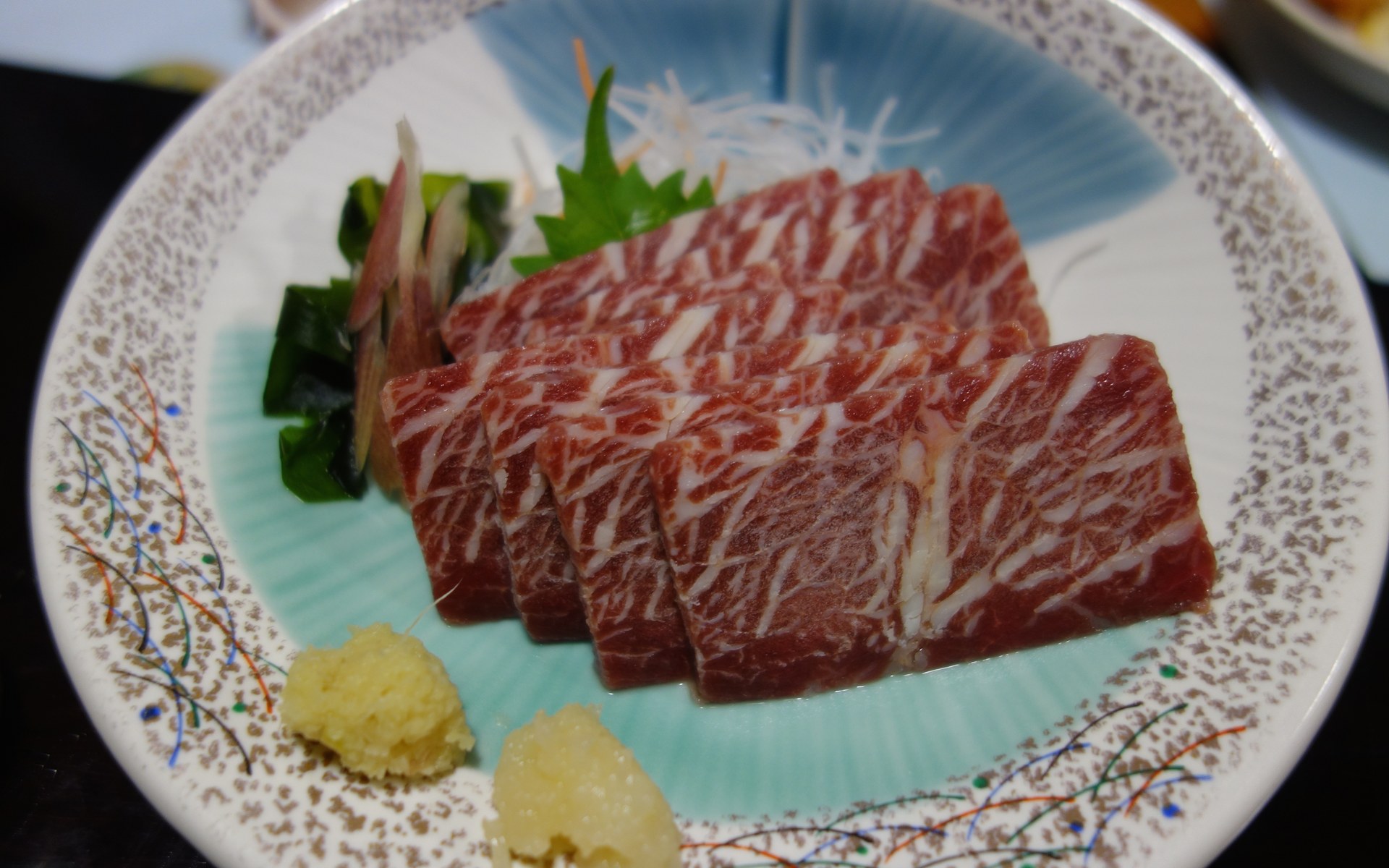
When it comes to local cuisine in Aizu-Wakamatsu, “basashi” is a must-try alongside kozuyu and wappa-meshi.Unlike the marbled horse sashimi from Kumamoto, Aizu’s version features lean meat as the star. The Aizu way is to dip it in soy sauce mixed with spicy miso. In this article, we’ll introduce the history of Aizu horse sashimi, how to eat it, and where to buy and enjoy it.
What Is Aizu Horse Sashimi? | Characterized by Lean Meat and Spicy Miso
Aizu basashi is a dish made by thinly slicing lean horse meat with little fat and eating it raw. It’s characterized by its light yet rich umami flavor and low fat content, offering a distinct taste from Kumamoto’s marbled basashi. Horse meat is also called “sakura-niku” (cherry blossom meat) due to its cherry-blossom pink color.
The key to enjoying it is “karashi miso.” This spicy miso—a blend of chili peppers, garlic, and miso—is dissolved in soy sauce, and the horse sashimi is dipped in it before eating.While grated garlic and grated ginger are common in Kumamoto, this karashi miso is indispensable in Aizu. Each butcher shop puts its own unique spin on the seasoning of their karashi miso, and some shops keep their recipes strictly confidential.
There are also various cuts available. In addition to lean cuts like the thigh and loin, there are the fillet—which yields only a small amount per animal—as well as the “Futaego” from the rib section and the “Tategami,” each offering distinct textures and flavors. At specialty shops, you can enjoy a tasting platter featuring a selection of different cuts.
The History of Horse Sashimi | The Boshin War and the Anecdote of Rikidōzan
It is believed that the tradition of eating horse meat in Aizu began around the time of the Boshin War. According to the Ministry of Agriculture, Forestry and Fisheries’ publication “Our Local Cuisine,” the practice of feeding horse meat to wounded soldiers who had been brought to the region is considered the origin of meat consumption in the Aizu area.
The culture of eating “basashi” (raw horse meat) did not spread until much later. The catalyst was the popular professional wrestler Rikidōzan, who visited Aizu-Wakamatsu in Shōwa 30 (1955).On September 1, after a professional wrestling event at Tsuruga Castle (Nishidemaru), Rikidōzan reportedly visited the butcher shop “Niku no Shōjirō” on Nanokamachi Street with his disciples. He asked for the horse meat hanging there “raw,” and began eating it dipped in a sauce brought in a jar by one of his disciples.Although there was no custom of eating horse meat raw at the time, Shōjirō’s official website states that this incident sparked the spread of the custom of eating basashi from Shōjirō to the entire Aizu region. Inspired by the sauce used on that occasion, Shōjirō created its signature spicy miso sauce.
Efforts to promote Aizu’s horse meat culture continue. The “Aizu Brand Horse Meat” Sakura Association promotes the appeal of horse meat by offering horse meat set meals at restaurants throughout the city on August 29, “Horse Meat Day.”Aizu-Bange Town, located next to Aizu-Wakamatsu City, is also known as a “horse meat town.” It is believed that the culture of eating horse meat took root there because, as a post town on the old Echigo Kaido highway, it once had a horse auction market.
Where to Buy | Niku no Shojiro (Nanokamachi Street)
If you’re looking to buy Aizu horse sashimi to take home, “Niku no Shojiro” on Nanokamachi Street is the first place to consider. Founded in Taisho 6 (1917), this specialty horse meat shop is the original store that pioneered “Original Aizu Horse Sashimi.”In addition to premium loin and thigh cuts of horse sashimi, the store also offers a three-variety tasting set and sakura yukhoe.
- Address: 1-15 Nishi-Nanokamachi, Aizuwakamatsu City, Fukushima Prefecture
- Hours: 10:00 a.m.–7:00 p.m.
- Closed: Sundays
- Access: 2-minute walk from “Nanokamachi Station” on the JR Tadami Line
- Parking: Available (6 spaces)
- Official Website: Niku no Shojiro (We also accept orders via fax)
Nanokamachi Street, as featured in the Nanokamachi Street Walking Guide, is a street that retains the romantic atmosphere of the Taisho era. You can stop by while strolling down the street after sightseeing at Tsuruga Castle or Mt. Iimori.
If You Want to Dine In: Tsuruga Aizu Main Store (in front of Aizu-Wakamatsu Station)
If you want to savor horse sashimi right there, we recommend the local cuisine restaurant “Tsuruga Aizu Main Store,” located in front of Aizu-Wakamatsu Station. They use only Aizu-brand certified horse meat, and you can sample and compare over eight different cuts of horse sashimi.In addition to the signature dish, “Premium Sakura Sashimi,” another specialty is “Sakura Nabe”—a sukiyaki-style hot pot featuring the highest-grade horse kalbi seasoned with Aizu’s unique cherry blossom-flavored spicy miso. You can also enjoy Aizu’s local dishes, such as kozuyu, along with local sake from the region.
- Address: 6-12 Ekimae-cho, Aizuwakamatsu City, Fukushima Prefecture
- Phone: 0242-29-4829
- Hours: Lunch 11:30 AM–2:30 PM (last order 1:30 PM), Dinner 5:00 PM–10:00 PM (last order 9:30 PM)
- Closed: Every Wednesday, January 1
- Official Website: Tsuruga Aizu Main Store
Since this is a popular restaurant, we recommend making a reservation in advance. For more information on Aizu’s local cuisine, please see our article on “Kozuyu,” and for local sake, please check out our Aizu Local Sake Guide.
How to Enjoy Basashi | Souvenirs and Precautions
Since basashi is eaten raw, it’s essential to purchase and dine at specialty shops with strict freshness control. If taking it home, follow the shop’s instructions to keep it refrigerated and consume it as soon as possible. You can also find spicy miso paste for basashi and related products at souvenir shops in the city center and select shops along Nanokamachi Street.
Aizu horse sashimi is less of a tourist delicacy and more of an everyday flavor deeply rooted in local dining.The combination of the light, savory flavor of the lean meat and the spicy kick of the mustard miso is an experience unique to Aizu. After exploring Tsuruga Castle and Mt. Iimori, why not sample Aizu’s culinary culture along Nanokamachi Street or near the train station?
Information verified on: November 11, 2026 (Business hours, closed days, and menus are subject to change. Please check the official website of Niku no Shojiro Tsuruga Aizu Main Store for the latest information before visiting.)
*Photo: “Basashi (15121111029).jpg” (Photo by pelican, CC BY-SA 2.0, Wikimedia Commons)