Aizu Cotton Guide | 400 Years of Vertical Stripes and the Toyota-Style Power Loom: Discover Aizu’s Handicrafts in Nanokamachi
"Aizu Cotton" features vertical stripes of white, red, and green on a navy background. Designated as a traditional craft by Fukushima Prefecture with a history of approximately 400 years, it was once cherished by the people of Aizu as workwear and everyday clothing.Thick and durable, with excellent heat retention and moisture-wicking properties, this fabric is still woven today at workshops such as Yamada Cotton Weaving on Nanokamachi Street in Aizu-Wakamatsu City. In this article, we’ll explore the history and characteristics of Aizu Cotton, as well as how to tour the weaving workshops, choose souvenirs, and explore Nanokamachi Street.
What Is Aizu Cotton? | 400 Years of History Told Through Vertical Stripes
The origins of Aizu Cotton date back to the early Edo period.It is said to have begun in the 4th year of the Kan’ei era (1627), when Kato Yoshiaki, the lord of the Aizu domain, invited weavers from his former domain—Matsuyama in Iyo Province—and introduced the techniques of “Iyo-shima,” a fabric that had flourished through trade in the Seto Inland Sea, to Aizu.In the 20th year of the Kan’ei era (1643), Masayuki Hoshina encouraged the cultivation of cotton, and cotton weaving spread as a form of home-based work among the wives and daughters of the domain’s samurai.
The most distinctive feature of Aizu cotton is its vertical stripe pattern. In the past, each region had its own pattern known as “Jishima,” and the fabric was so familiar that one could tell a person’s place of origin simply by the stripes on their clothing.It is said that differences in patterns arose from the use of locally sourced plants for dyeing, and records indicate that nearly 100 distinct “jishima” patterns have been preserved. While white stripes on a navy background were originally the norm, today’s fabrics feature stripes in a variety of colors, such as red and green.
The manufacturing process also incorporates techniques unique to Aizu. By soaking the warp threads in a wheat starch solution to stiffen them with sizing before weaving in the weft threads, fine knots and air pockets form between the threads, creating a fabric that absorbs sweat well and offers excellent thermal insulation.Characterized by its thick, plump texture, it is less prone to shrinking than standard plain-woven cotton fabrics and is durable enough to withstand home laundering. The standard fabric width remains approximately 38 cm, unchanged since the era of the kimono.
From the late Meiji period through the Taisho era, the production of Aizu cotton reached its peak. Although demand subsequently declined due to changes in lifestyle, three factories—Yamada Cotton Weaving in Aizu-Wakamatsu City, Harappa, and IIE Lab. in Aizu-Bange Town—currently handle production and continue to preserve this tradition.
Yamada Cotton Weaving Mill | Founded in Meiji 38, a weaving mill on Nanokamachi Street
If you want to experience Aizu cotton firsthand, your first stop should be Yamada Cotton Weaving Mill on Nanokamachi Street.Established in Meiji 38 (1905), this long-established workshop weaves fabric using vintage automatic looms (Toyoda-style power looms) that have been in continuous use since the early Showa period. Since the entire process—from dyeing the yarn to weaving the fabric—is carried out in-house, visitors can observe the traditional weaving process up close.
Factory tours are available without an appointment, and the attached shop sells not only colorful bolts of fabric but also everyday clothing and a wide variety of fabric accessories. This expands the fun of selecting souvenirs and mementos from your trip.
Section | Details |
|---|---|
Address | 11-5 Nanokamachi, Aizuwakamatsu City, Fukushima Prefecture 965-0044 |
Phone | 0242-22-1632 |
Hours | 9:00 a.m. to 6:00 p.m. (According to the Fukushima Prefecture tourism information site “Welcome Fukushima”) |
Closed | Irregular holidays (as above) |
Business hours and closed days are based on information from the tourism website; we were unable to confirm the current status on the official website. Please check the official website or call before visiting. The official website is Yamada Cotton Weaving.
Harappa and IIE Lab. | Two Workshops Weaving the Present
There is another company in Aizu-Wakamatsu City that specializes in the production of Aizu cotton. Harappa carries on the legacy of the Harayama Textile Factory, founded in Meiji 32, and continues to weave Aizu cotton using automatic looms invented over 100 years ago.The company also focuses on creating products suited to modern life, such as shirts and bags, and has garnered attention overseas. Please note that factory tours at Harappa are currently suspended, and only authorized personnel are permitted inside the facility.
Located in Aizu-Bange Town, IIE Lab. (E-Lab) is a workshop that acquired and restored old looms from a defunct factory and spent about seven years developing its own original Aizu cotton. You can purchase Aizu cotton products at the factory outlet. It is about a 30-minute drive from Aizu-Wakamatsu City.
Choosing Aizu Cotton Souvenirs | Fabric That Gets Softer the More You Use It
Aizu Cotton products range widely from shirts and bags to small fabric accessories like pouches and handkerchiefs, and can be found at shops along Nanokamachi Street and at the Aizu Brand Hall. Here are three key points to keep in mind when choosing:
- Choose by Stripe Pattern: The traditional navy-and-white stripes, which trace their origins to the “Jishima” pattern, embody the very essence of Aizu. Modern color variations in red and green are also available, so you can choose based on your preference.
- Check the thickness and texture: A thick, plump texture is the hallmark of Aizu cotton. Pick it up and feel it for yourself.
- Choose items for everyday use: Since it’s machine-washable at home and becomes softer with each wash, everyday shirts and bags made from Aizu cotton will last for years.
Aizu cotton is a fabric that becomes more comfortable against your skin the more you use it. If you’re looking for a souvenir, why not pick up one for yourself as a memento of your trip?
Explore Along with Nanokamachi Street
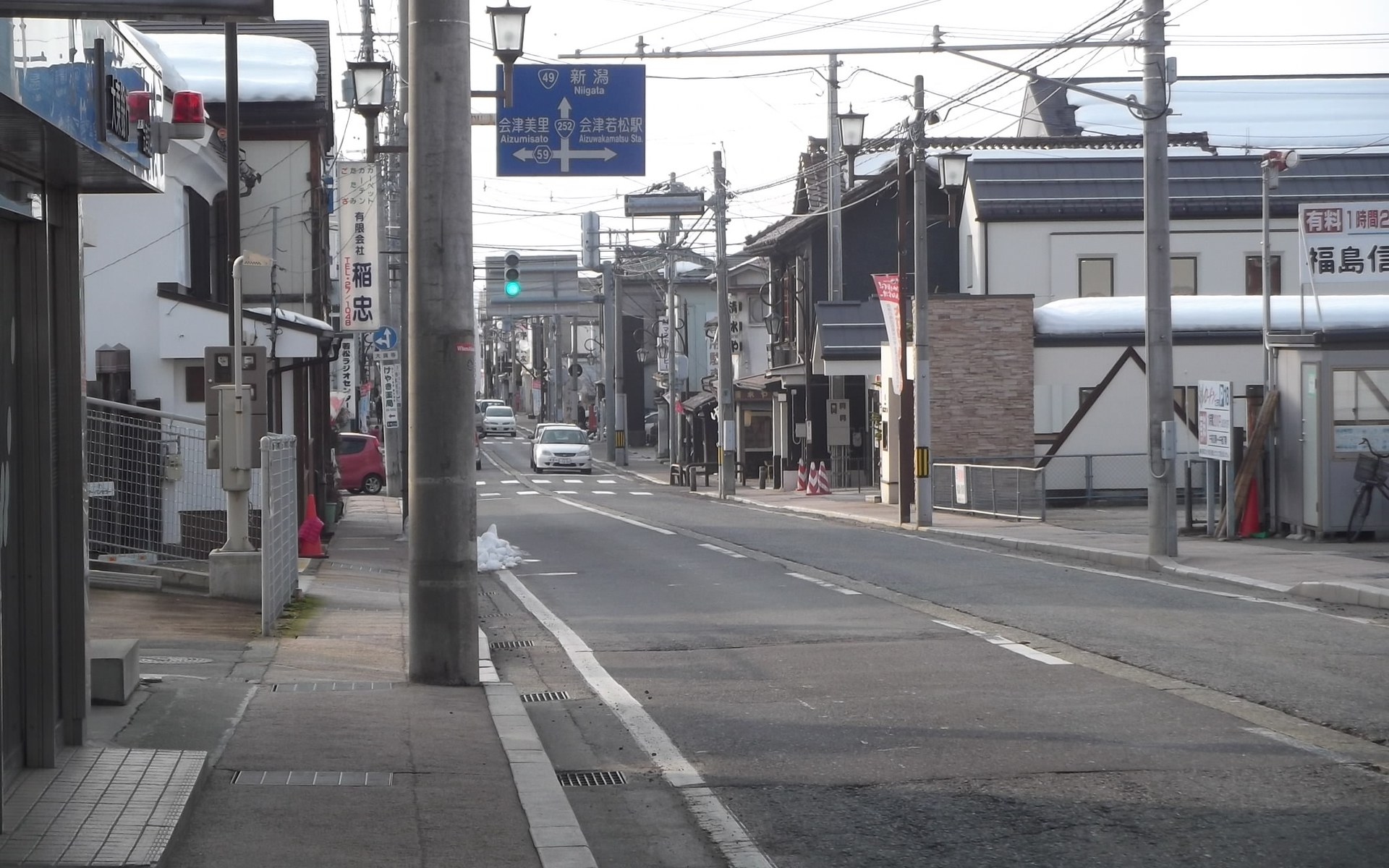
Nanokamachi Street, home to Yamada Cotton Weavers, is a walking area in Aizu-Wakamatsu where the streetscape of the Taisho Romantic era remains preserved. Along the street, you’ll find Akabeko Land Nanokamachi, where you can try your hand at painting Akabeko cows, as well as the Aizu Brand Hall, which showcases Aizu’s crafts and cuisine—allowing you to enjoy a tour of Aizu’s traditional crafts along a single street.For more details on the walk, please see the Nanokamachi Street Walking Guide.
Summary
Aizu Cotton is a vertically striped cotton fabric that has supported the lives of the people of Aizu for approximately 400 years, built upon techniques introduced from Iyo in 1627.This thick, durable fabric—which offers excellent heat retention and moisture absorption—is still woven today at the Yamada Cotton Weaving Mill on Nanokamachi Street using Toyoda-style power looms. When visiting Aizu-Wakamatsu, why not combine a tour of the weaving mill with a stroll down Nanokamachi Street to experience Aizu’s traditional crafts firsthand?
Information verified on: November 15, 2026 (Business hours and fees are subject to change. Please check the official website for the latest information before visiting)
*Photo: Nanokamachi Street (“Nanokamachi St at Aizuwakamatsu, Fukushima.jpg,” photo by Breakover, CC0, Wikimedia Commons). Since no photos of Aizu cotton products with verifiable licenses were available on Wikimedia Commons, a photo of Nanokamachi Street, where the weaving workshop is located, has been used instead.