Aizu-Wakamatsu Winter Itinerary | A Day Spent Enjoying Snow-Covered Tsuruga Castle and Mt. Iimori, Strolling Through Nanokamachi, and Warming Up at Higashiyama Onsen
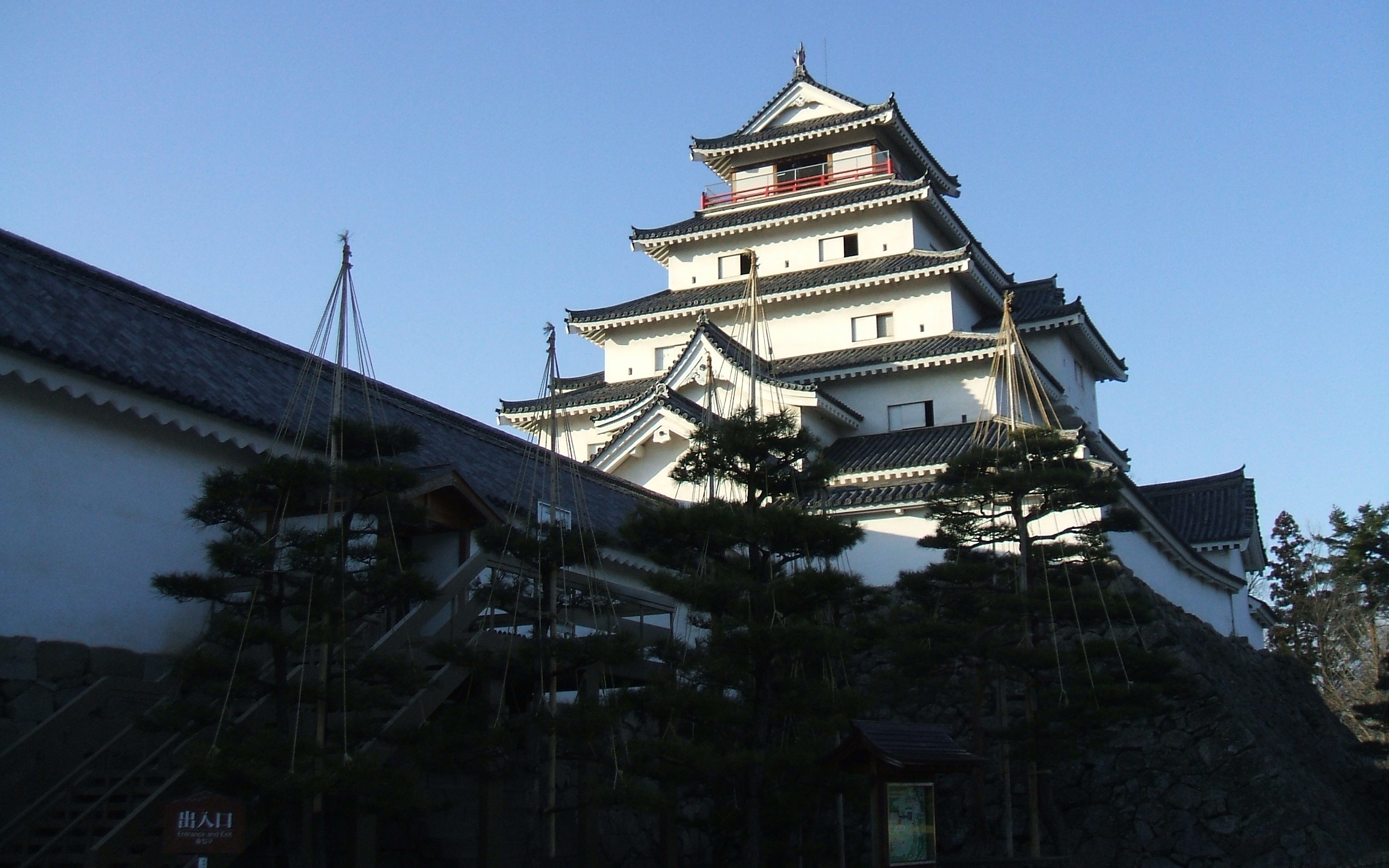
On a snowy morning, the town of Aizu-Wakamatsu falls into a deep silence.The red-tiled castle keep towers over the town, crowned with white snow, as you walk through the castle town, crunching through the snow on the stone steps. The cold is bitter, but that’s precisely what makes Aizu’s winter special—it offers scenery and a warmth you can only experience here. In this article, we’ll guide you through a one-day model itinerary for winter in Aizu-Wakamatsu that you can explore entirely by bus, even without a car.From Sazaedo Temple on Mount Iimori to the snow-covered Tsurugajo Castle, followed by lunch and a stroll in Nanokamachi, and finally, a visit to Higashiyama Onsen. We’ve planned the itinerary—including the time allocation—in a sequence that’s unique to winter.
Here’s how to spend a winter day
The key to enjoying Aizu-Wakamatsu in winter in a single day is to “start with the places that close early.”Sazaedo is open until 4:00 PM from December through March, and the last admission to Tsurugajo Castle’s main keep is at 4:30 PM. So, the ideal schedule is to visit Mt. Iimori in the morning, Tsurugajo Castle before noon, have lunch in Nanokamachi, and spend the afternoon at the hot springs.
Time | Location | What to Do |
|---|---|---|
9:00 | Aizu-Wakamatsu Station | Depart on the “Akabee” downtown sightseeing bus |
9:20–10:40 | Mt. Iimori | Visit Sazae-do and the graves of the 19 members of the Byakkotai |
11:00–12:30 | Tsuruga Castle | Enjoy the main keep, the Rinkaku tea house, and the snowy scenery |
12:30–1:30 p.m. | Nanokamachi Street | Lunch featuring sauce-covered pork cutlet rice bowls and wappa-bento |
1:30 PM–3:00 PM | Nanokamachi Street | Stroll through the Taisho-era romantic streetscape and shop for souvenirs |
3:30 PM–5:00 PM | Higashiyama Onsen | Warm up after a day out with a day-trip bath |
5:30 PM– | Tsuruga Castle (November 20–22 only) | Watch the projection mapping show |
The “Haikara-san” and “Akabee” downtown sightseeing buses are convenient for getting around. The “Haikara-san,” which runs counterclockwise, stops at Nanokamachi and Tsurugajo first, while the “Akabee,” which runs clockwise, stops at Mt. Iimori first.Fares are 250 yen for adults and 130 yen for children per ride; a one-day unlimited ride pass costs 700 yen for adults and 350 yen for children. If you plan to ride three or more times, the unlimited ride pass is a better deal.
Start the Morning at Mt. Iimori | The Snow-Covered Sazaedo and the Story of the Byakkotai
First, head to Mt. Iimori, about a 5-minute bus ride from Aizu-Wakamatsu Station. According to the revised timetable effective April 2026, the clockwise “Akabee” departs Aizu-Wakamatsu Station at 9:15 a.m. and arrives at the base of Mt. Iimori at 9:20 a.m.
Sazae-do (officially known as Entsu Sansodo), standing halfway up Mt. Iimori, is a three-story, hexagonal wooden hall built in 1796. It features a double-helix structure where the ascending and descending pathways never cross, making it a rare architectural marvel even on a global scale.Winter visiting hours (December through March) are from 9:00 AM to 4:00 PM. Admission is 400 yen for adults, 300 yen for high school and college students, and 200 yen for elementary and junior high school students. On snowy days, the stone steps can become slippery, so be sure to wear non-slip shoes.There is also a moving walkway (conveyor) for going up and down the mountain, which operates from 9:00 AM to 4:00 PM during the winter.
Near the summit lies the grave of the 19 members of the Byakko-tai. This is the site where these 16- to 17-year-old boys committed ritual suicide in the midst of the Boshin War. Standing at the snow-covered gravesite, you can almost feel the boys’ unwavering resolve and their spirit watching over the castle town.From the summit, you can also enjoy a panoramic view of Tsuruga Castle and the castle town. For more details, please see the Sazae-do and Mt. Iimori Guide.
Before noon, head to snow-covered Tsuruga Castle | The contrast of red tiles and silver snow
Take the bus from Mt. Iimori to Tsuruga Castle. If you arrive around 11:00 a.m., you’ll have plenty of time—about an hour and a half—to explore the main keep at your leisure.
Tsuruga Castle’s main keep is the only one in Japan clad in red roof tiles. The contrast between the white snow and the red tiles is a spectacular sight unique to Aizu in winter.The interior of the main keep has been converted into a museum, and from the observation deck on the top floor, you can enjoy views of the snow-covered castle town and Mount Bandai. Opening hours are 8:30 a.m. to 5:00 p.m. (last admission at 4:30 p.m.), and the castle is open every day.Admission is 410 yen for adults and 150 yen for children; a combined ticket with the Rinkaku Tea House costs 520 yen, and a three-site combined ticket that includes the Oyakuen Garden costs 730 yen.
From November through late March, snow supports are installed on the pine trees within the park. This winter tradition protects the branches from the weight of the snow—be sure to capture a photo of the snow supports against the backdrop of the castle keep.
After visiting the castle keep, head to the Rinkaku tea house within the park. This tea house is associated with Shoan, the son of Sen no Rikyū, and offers matcha tea. A tea ceremony costs 600 yen per session, though the price will increase to 700 yen starting December 1, 2026.A warm cup of matcha enjoyed while gazing at the snowy landscape will warm you right to the core. For more details on the highlights of Tsurugajo Castle, please see the Tsurugajo Guide.
Lunch and a Retro Stroll in Nanokamachi
For lunch, take the bus to Nanokamachi Street. This is the “kitchen of the castle town,” where you’ll find a variety of Aizu specialties.
Perfect for a cold day is the sauce katsu-don—a bowl of thick pork cutlets dipped in a sweet and savory sauce. If you want to warm up from the inside out, we also recommend wappa-meshi, a bento box filled with a variety of land and sea delicacies. Some restaurants even serve kozuyu, a traditional soup served at celebratory gatherings in Aizu.To help you choose a restaurant, check out our guides to sauce katsu don, wappa rice, and an introduction to kozuyu.
After your meal, take a leisurely stroll down Nanokamachi Street. The Taisho-era romantic streetscape, lined with Western-style buildings and storehouses from the Meiji through early Showa periods, takes on even more charm when covered in snow.Pop into shops selling Aizu lacquerware and Aizu cotton, or take a break at a retro warehouse café. If you have time, you can also enjoy a painting workshop for Aizu decorated candles. For detailed information on walking the town, see the Nanokamachi Street Walking Guide; for information on decorated candles, see the Aizu Decorated Candles Guide.
Warm Up at Higashiyama Onsen in the Afternoon
To warm up after a walk through the snowy town, head to Higashiyama Onsen, about a 15-minute bus ride from the castle town. This hot spring resort, with a history spanning approximately 1,300 years, features ryokan lining the Yugawa River gorge.
Hours and fees for day-use bathing vary by ryokan. According to the Higashiyama Onsen Tourism Association, for example, Harataki is open from 1:00 PM to 8:00 PM (adults 1,080 yen, children 540 yen),Oedo Onsen Monogatari Higashiyama Grand Hotel is open from 3:00 PM to midnight (last admission at 10:00 PM; adults 1,000 yen, weekends and holidays 1,250 yen),and at Onyado Toho, the hours are 1:30 PM to 4:00 PM (last admission at 3:00 PM; adults 1,400 yen, weekends and holidays 1,800 yen).Shosuke no Yado Takino-yu is open only from 1:00 PM to 3:00 PM on Saturdays, Sundays, and holidays (Adults: 1,200 yen; Children: 600 yen),Hotel Fushimiso is open from 4:00 PM to 8:00 PM (adults 700 yen, children 400 yen). Day-use bathing hours vary by day and may be suspended without notice, so it’s best to call ahead to confirm before visiting. Please note that the footbaths in the hot spring town are closed during the winter.
Spending time gazing at the steam rising from the open-air baths and the snowy landscape may be the greatest reward of your winter trip to Aizu. For more information on the history and waters of Higashiyama Onsen, please see the Higashiyama Onsen Guide.
Evening Entertainment | Projection Mapping and Winter Festivals
If your schedule allows, don’t miss Tsuruga Castle at night. From Friday, November 20, to Sunday, November 22, 2026, from 5:30 PM to 9:00 PM, “Tsuruga Castle Projection Mapping 2026” will be held at Tsuruga Castle.Images featuring motifs such as Aizu lacquerware, Aizu painted candles, and Aizu cotton will be projected onto the castle keep and stone walls. Admission is free, and no advance registration is required. It’s a wonderful way to spend the evening—returning from the hot springs to admire the castle at night.
If you’re planning a winter trip to Aizu, be sure to keep the “Aizu Decorated Candle Festival ~Yuki Hotaru~” in February in mind as well. Held primarily at Tsuruga Castle and the Oyakuen Garden, the festival features approximately 10,000 decorated candles illuminating the snowy night.In 2027, the festival is scheduled for Friday, February 12, and Saturday, February 13.
Winter Travel in Aizu: What to Bring and What to Keep in Mind
- Make sure to bundle up. Winters in Aizu-Wakamatsu can get very cold. Be sure to wear full winter gear, such as a down jacket, gloves, and a scarf.
- Wear non-slip shoes. Since you’ll be walking on snowy paths and icy stone steps, shoes with non-slip soles are recommended.
- Check the bus schedule. Some routes of the downtown sightseeing bus are suspended during the year-end and New Year’s holidays. Please check the official Aizu Bus website for the latest schedule.
- Don’t push yourself on days with heavy snow. Access to attractions like Sazaedo may be affected by heavy snowfall. Check the weather forecast, and if you’re unsure, call the facility to inquire.
- Call ahead for day-trip bathing. Reception hours for day-trip bathing at Higashiyama Onsen vary by day. It’s best to call your inn to confirm before heading out.
Summary
Aizu-Wakamatsu in winter is a beautiful city precisely because of the snow. Spend the morning at Sazaedo on Mt. Iimori, visit the snow-covered Tsurugajo Castle before noon, enjoy local cuisine in Nanokamachi for lunch, warm up at Higashiyama Onsen in the afternoon, and watch the projection mapping show in the evening.With a one-day unlimited bus pass in hand, if you visit the attractions in order starting with those that close early, you can fully experience Aizu’s winter in a single day—even without a car. Just don’t forget to bundle up and wear non-slip shoes—why not head out to this snow-covered castle town?
Information verified on: November 18, 2026 (Opening hours, fees, and event dates are subject to change. Please check the official website for the latest information before visiting.)
*Photo: Tsuruga Castle in the snow (“Tsuruga-jyo castle in winter,” Wikimedia Commons, CC BY-SA 3.0, by Breakover)