Tour Guide to the Aizu Domain School, Nisshinkan | Admission Fees, Directions, the “Ten Commandments,” and the Samurai School Where the Byakkotai Studied
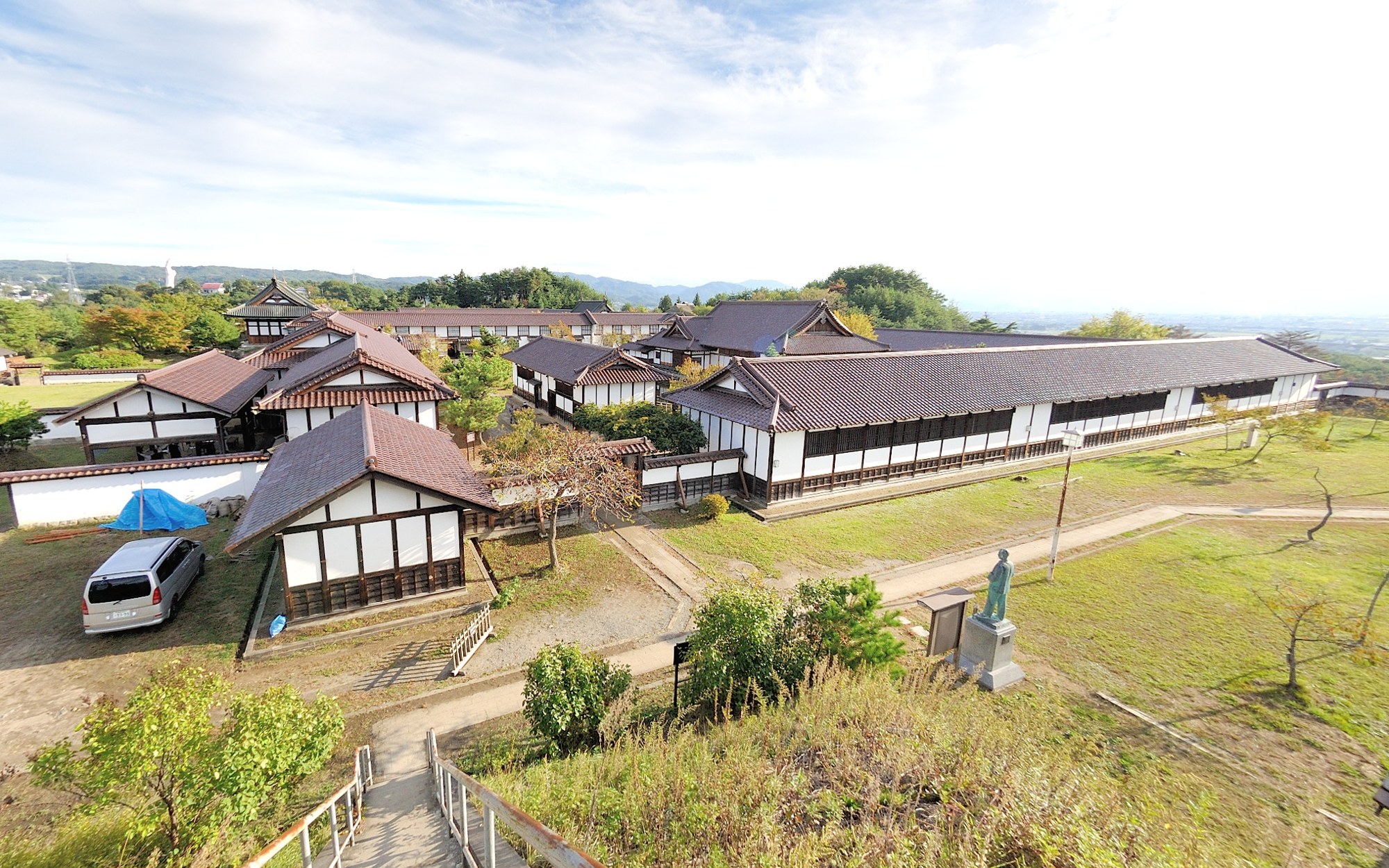
A school building with pure white walls and a tiled roof stands on a quiet hill. This is “Nisshinkan,” the domain school where young men of the Aizu Domain studied both the arts and martial arts during the Edo period. The boys of the Byakkotai were also students at this school.The vast grounds, where you can stroll as if you’ve stepped back in time, are full of surprising “firsts in Japan,” such as the country’s oldest swimming pool and the birthplace of school lunches. In this article, we’ll guide you through Nisshinkan’s highlights, hands-on experiences, and how to get there.
What Kind of School Was Nisshinkan?
Nisshinkan was the highest institution of learning in the Aizu Domain, established in 1803 (the third year of the Kyōwa era) with the aim of nurturing talent. At the time, there were about 300 domain schools nationwide, but Nisshinkan is said to have boasted top-level standards in both academic achievement and martial arts.Admission began at age 10, and the number of students exceeded 1,000. Among those who studied here were, of course, the young members of the Byakkotai, as well as Kenjirō Yamakawa, who later became president of the University of Tokyo.
Originally located west of Aizu-Wakamatsu Castle (Tsurugajo), the school was destroyed by fire during the Boshin War of 1868. The current building was reconstructed in 1987 on a hill in Kawahigashi Town—on the eastern side of the Aizu Basin—faithfully replicating its original appearance.
“What Must Not Be Done Must Not Be Done”—The Ten Commandments and the Educational System
Children in Aizu grew up learning a set of rules known as the “Ten Commandments” (Jū no Okite) around the age of six.These guidelines—which included principles such as “You must not tell lies” and “You must not bully the weak”—concluded with the phrase, “What must not be done, must not be done.” To this day, this phrase is passed down as the foundation of Aizu’s spiritual culture.
Upon entering the Nisshinkan at age 10, students first learned the basics of reading and writing; those with outstanding academic performance could advance to higher-level schools, where they could study specialized fields such as astronomy and medicine. Martial arts training was also rigorous, and the campus featured both a martial arts dojo and an archery range.Mastering both the arts of scholarship and martial arts was the ideal of the Aizu samurai.
Japan’s Oldest Swimming Pool and the Beginnings of School Lunches
Nisshinkan features many innovations considered to be the roots of Japan’s school system.
- Swimming Training Pond: A large pond for learning to swim, said to be “Japan’s oldest swimming pool”
- School Lunches: Believed to have begun in Bunka 3 (1806), these are considered the forerunners of Japan’s school lunch program. The basic meal consisted of one soup and one dish, and it is said that dried fish or salted salmon were served about three times a month
- Field Trips (To-ashi): Training involving long-distance walking was called “to-ashi” and is said to mark the beginning of the marathon.
“Did the pool, school lunches, and field trips all originate from samurai schools?”—it’s full of surprising stories like this. As you tour the site, try to imagine the daily lives of the students back then.
A Walking Tour of an Edo-Period School
At the center of the grounds stands the Taiseiden, a hall dedicated to Confucius. Surrounding it are classrooms where students learned to read and write, lecture halls, and martial arts dojos, allowing you to walk through a faithful recreation of an Edo-period school. The average tour takes about 50 to 60 minutes.If you walk slowly, you might even feel as though you can hear the very breath of the students from that era.
Experience a Samurai School Through Kyudo and Pottery Painting
One of the joys of Nisshinkan is that you can participate in hands-on activities, not just observe.
- Kyudo Experience: 500 yen (5 arrows). Focus your mind as you aim for the target—a unique experience that lets you feel like a samurai.
- Pottery Painting Experience: Akabeko 1,800 yen, Byakko Sword 1,500 yen, Okiagari Koboshi 700 yen. Create your own one-of-a-kind souvenir.
- Zazen and Tea Ceremony: 1,500 yen each (reservation required; groups of 10 or more; approx. 40 minutes)
Inside the museum, you can also enjoy a menu inspired by school lunches, as well as miso dengaku—a dish said to have been eaten by the Byakkotai. See, learn, experience, and savor. Nisshinkan is a place where you can enjoy yourself with all five senses.
Directions and Basic Information
Category | Details |
|---|---|
Address | 10 Takatsukayama, Minami-Takano, Kawahigashi-machi, Aizu-Wakamatsu City, Fukushima Prefecture 969-3441 |
Phone | 0242-75-2525 |
Hours | 9:00 a.m.–5:00 p.m. (Last admission at 4:00 p.m.) |
Closed | Open year-round |
Admission | Adults: 1,800 yen; Middle and High School Students: 900 yen; Elementary School Students: 800 yen (various discounts available) |
Parking | 200 standard-sized vehicles |
From Aizu-Wakamatsu Station, it’s about 30 minutes by bus (Kawato/Minato Line); get off at the “Aizu Han-ko Nisshinkan” stop—it’s right there.It takes about 15 minutes by taxi. From the nearest station, Hirota Station, it’s about a 5-minute taxi ride; by car, it’s about 5 minutes from the Bandai-Kato Interchange on the Ban-Etsu Expressway. The official website is Aizu Han-ko Nisshinkan.
If you’re planning a tour, we also recommend a one-day itinerary that combines a visit to Mt. Iimori and Sazaedo—where you can trace the story of the Byakkotai—with a visit to Tsurugajo Castle.
Summary
Nisshinkan is a “samurai school” where the spirit of the Aizu samurai lives on. Experience the origins of the Byakkotai’s story, marvel at Japan’s oldest swimming pool and the beginnings of school lunches, and straighten your posture while practicing kyudo. Be sure to add this to your itinerary if you’re looking to delve deeper into Aizu’s history.
Information verified on: November 16, 2026 (Opening hours, admission fees, and activities are subject to change. Please check the official website for the latest information before visiting.)
*Photo: “Nisshinkan Samurai School exterior on October 18, 2013” (Wikimedia Commons, CC BY-SA 3.0, by Mukasora)