Tō no Hetsuri Tourist Guide | Cross the Suspension Bridge to the Cliffs of Strange Rocks: Scenic Spots in Shimogo Town, Including Ōuchi-juku
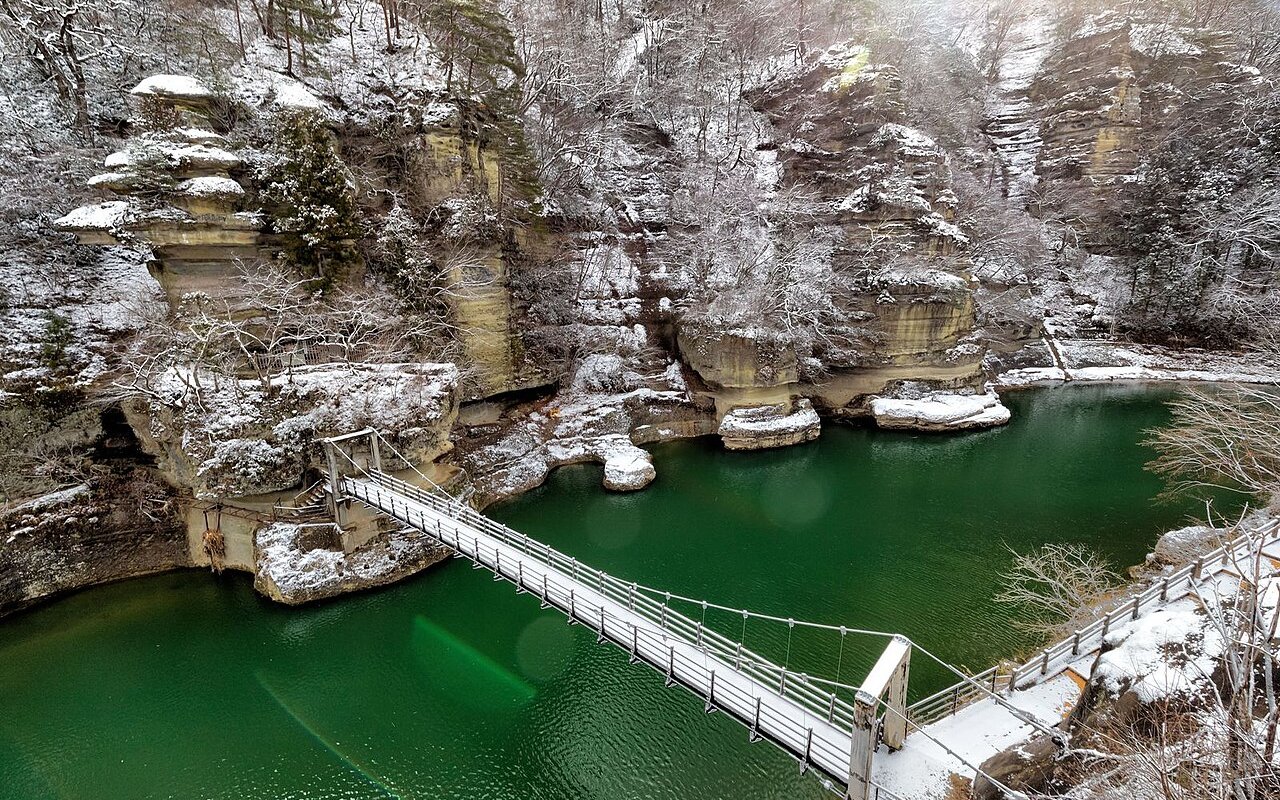
Tower-like rocks line the banks of an emerald-green river—this is the wondrous scenery you’ll encounter at “Tō no Hetsuri” in Shimogo Town.Located in Minami-Aizu, about an hour’s drive from Aizu-Wakamatsu, it is a scenic spot that many visitors explore together with Ouchi-juku. As you cross the suspension bridge and enter the interior of the cliff, bizarre rock formations loom right before your eyes.Let us introduce this breathtaking scenery, created over a million years and designated as a National Natural Monument.
What is Tō no Hetsuri like?
Tō no Hetsuri is a scenic spot featuring bizarre rock formations carved out over a long period of time by the flow of the Ōkawa River.The Okawa River is actually the Agawa River, as it is known in the Aizu region. The rocks, formed through repeated erosion and weathering, tower up like towers, which is why the site came to be called “Tō no Hetsuri.”“Hetsuri” is a local dialect term meaning “a cliff or steep slope jutting out over a river.”
Designated a National Natural Monument in 1943 (Showa 18), it is considered the most scenic spot within the Okawa-Hatori Prefectural Park. The river’s color is a deep green. The contrast between the snow-capped rocks and the emerald-green water flowing smoothly is a beauty unique to winter.
Cross the Suspension Bridge into a World of Rocks
The greatest highlight of Tō no Hetsuri is, without a doubt, the experience of crossing the suspension bridge. As you cross the suspension bridge spanning the river, you enter the interior of the cliffs. Walking through the deeply carved rock arcade, you’ll see bizarre rock formations towering like giant stone towers.Inside a cave that appears to have been carved directly out of the rock lies a small shrine (the Kokuzo Bosatsu Hall), where you can see people quietly joining their hands in prayer.
From the center of the suspension bridge, you can take in a panoramic view of the sheer cliffs and the flowing river. If you’re taking photos, the rock face illuminated by the afternoon western sun is highly recommended. Viewing it from the upper part of the stairs leading down to the suspension bridge allows you to beautifully capture the interplay of the rocks and the river.
However, the stairs leading up to the cliff are narrow and steep in places. Be careful where you step, and we recommend wearing comfortable walking shoes. There are restaurants and souvenir shops near the bridge where you can take a break during your stroll.
Scenery That Changes with the Seasons
Tō no Hetsuri offers a different charm with each passing season. In spring, fresh green foliage that has just begun to sprout envelops the rocks, and in early summer, wild wisteria flowers hang down from the bizarre rock formations.In autumn, the autumn foliage paints the rock walls, and the fallen leaves drifting down the river add a touch of charm. And then there’s winter. The scenery created by the snow-capped rocks and the deep green river surface is truly a gift of winter from Minami-Aizu. It’s a place where you’ll discover a different face no matter when you visit.
Combine Your Visit with Ōuchi-juku
Tō no Hetsuri is located about a 20-minute drive from Ōuchi-juku. Ōuchi-juku retains the atmosphere of an Edo-period post town, while Tō no Hetsuri showcases the natural sculptural beauty created over a million years. You can explore these two famous spots, each with its own distinct charm, in just half a day.
The recommended itinerary is to start with Ouchi-juku. Stroll through the streets lined with thatched-roof houses, enjoy the famous negi soba for lunch, and then drive about 20 minutes to Tō no Hetsuri. Allow about 30 to 40 minutes to walk across the suspension bridge and explore the cliffs.Allow 1.5 to 2 hours for strolling and dining in Ouchi-juku, 30 to 40 minutes for Tō no Hetsuri, and another hour or so for travel time—a total of about 3.5 to 4 hours—to fully enjoy both spots.
If you’re traveling by public transportation, it’s conveniently located just a 5-minute walk from Tō no Hetsuri Station on the Aizu Railway.To get to Ouchi-juku, transfer to the “Saruyu-go” retro sightseeing bus at the neighboring Yunokami Onsen Station; the ride takes about 20 minutes.The Saruyugo runs seasonally with about six round trips per day, so it’s best to have the schedule handy—including transfer times at Yunokami Onsen Station—to ensure a smooth trip.
For more information on the highlights of Ouchi-juku and its scallion soba, please also check out the Ouchi-juku Tourist Guide. We also recommend staying at Yunokami Onsen or Ashino-maki Onsen to take your time exploring Minami-Aizu. For more information on Ashino-maki Onsen, please see the Ashino-maki Onsen Guide.
Practical Information to Know Before You Go
Topic | Details |
|---|---|
Address | Shimotabayashi, Yagoshima, Shimogo Town, Minamiaizu District, Fukushima Prefecture |
Access (Rail) | Approx. 5-minute walk from Tonohetsuri Station on the Aizu Railway Aizu Line |
Access (by Car) | Approx. 50 minutes from the Aizu-Wakamatsu Interchange on the Ban-Etsu Expressway; approx. 60 minutes from the Shirakawa Interchange on the Tohoku Expressway; approx. 45 minutes via National Route 121 from the direction of Aizu-Wakamatsu |
From Ouchi-juku | About 20 minutes by car |
Parking | Available at various shops near the bridge (please inquire at each shop regarding fees) |
Admission | None (outdoor natural monument) |
Estimated Visit Time | Approximately 30–40 minutes |
Inquiries | Shimogo Town Commerce, Industry, and Tourism Division: 0241-69-1144 |
Southern Aizu experiences heavy snowfall in winter. If you plan to visit by car, please ensure your vehicle is equipped with winter gear, such as studless tires.
Summary
Tō no Hetsuri is a natural masterpiece of Aizu, shaped by a million years of time and the flow of the Okawa River. Crossing the suspension bridge to enter the interior of the cliff offers a sense of grandeur quite different from what you see in photographs.If you combine a visit here with a trip to Ouchi-juku, you can enjoy both sides of Aizu—an Edo-period post town and a scenic spot from ancient times—all at once. Be sure to stop by on your next trip to Minami-Aizu.
Sources and References
Information Verified: November 22, 2026
Source:
- Fukushima Prefecture Tourism Information Site “Fukushima Travel” — Tō no Hetsuri https://www.tif.ne.jp/jp/entry/article.html?spot=6655 — Overview, address, parking, access, photography tips, and contact information
- Shimogo Town Official Tourism Site “Shimogo NAVI” — Tō no Hetsuri https://www.town.shimogo.fukushima.jp/shimogo_navi/seeing/592.html — Designation as a Natural Monument, rock arcade, and seasonal scenery
- Ministry of Land, Infrastructure, Transport and Tourism Multilingual Explanatory Text Database — Tō no Hetsuri https://www.mlit.go.jp/tagengo-db/common/001558752.pdf — Information on the suspension bridge, the shrine in the cave, safety precautions for the stairs, seasonal scenery, and nearby shops
- Aizu-Wakamatsu Tourism Navi — 2-Day, 1-Night Itinerary https://www.aizukanko.com/course/788 — Introduction to Tō no Hetsuri, access, and parking information
Operating hours, admission fees, and transportation information are subject to change. Please check the official website for the latest information before your visit.
Image Credit: Featured Image “Tonohetsuri and the Suspension Bridge in the Snow” — Wikimedia Commons, CC BY 4.0, Photo by Kurofune (File:Tonohetsuri20191228-IMG 7242.jpg, taken December 28, 2019).
