Shibukawa Wholesale (Aizu-Wakamatsu, Nanokamachi Street) | Enjoy local cuisine in a building that once housed a seafood wholesaler founded in the Meiji era
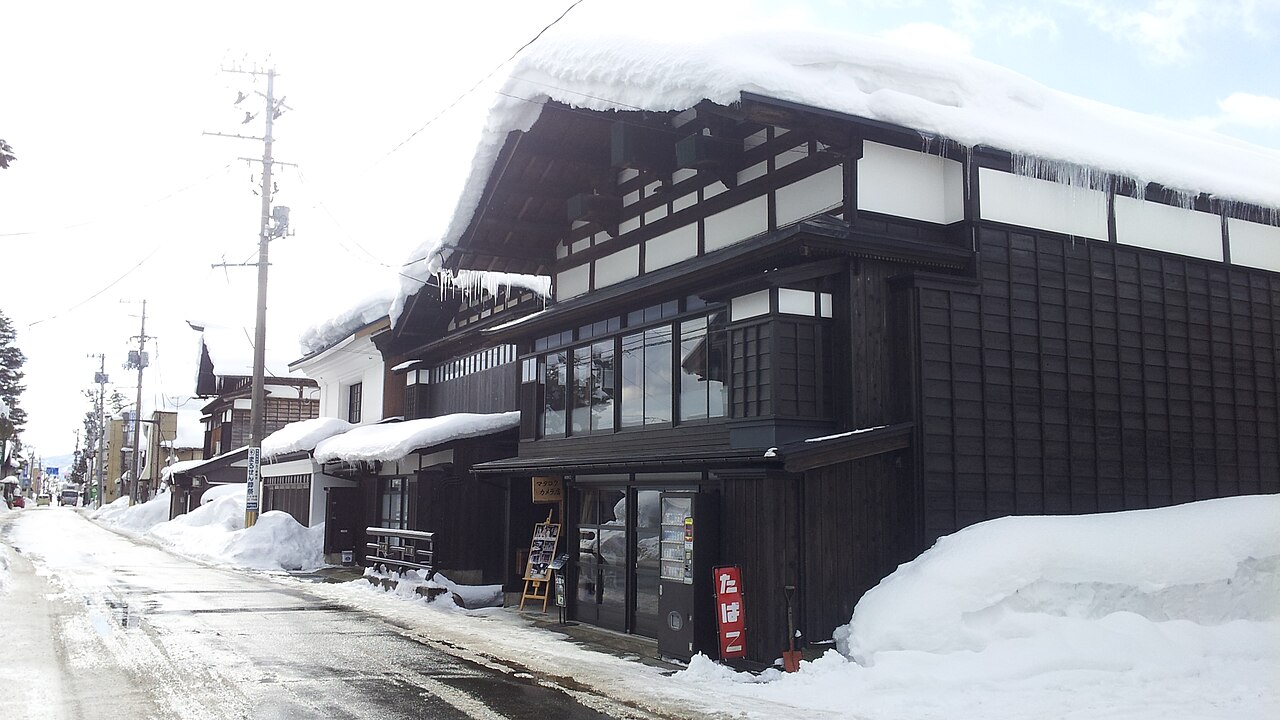
Nanokamachi Street retains the traditional townscape characteristic of the castle town of Aizu-Wakamatsu. In one corner of the street stands a building that particularly catches the eye with its stately appearance and lattice doors.It is “Shibukawa Donya,” which carries on the legacy of a seafood wholesaler founded in Meiji 15 (1882).The building, once hailed as the largest and most prestigious in Aizu, continues to be cherished and used to this day. Inside, you can savor Aizu’s local specialties—such as “kozuyu” and simmered cod sticks—as well as Aizu beef. We’ve compiled official information on the building’s history, architecture, and current operations.
History as a Seafood Wholesaler
Shibukawa Donya traces its origins to when its founder, Zentaro Shibukawa, established the business as a seafood wholesaler in the mountainous region of Aizu.From the Edo period through the Meiji period, Kitamae ships traveled back and forth across the Sea of Japan, connecting Hokkaido and Osaka. From the port of Niigata, they sailed up the Agano River, bringing dried seafood—such as skinned herring and dried cod on sticks—to landlocked Aizu.These dried seafood delicacies were a valuable source of protein in Aizu and became the foundation of the region’s local cuisine.
At its peak, from the Taisho era through the early Showa era, the company grew to become Aizu’s leading seafood wholesaler—so much so that it was said, “The price of herring is set at the Shibukawa Wholesale House.”It handled not only dried seafood but also fertilizers, sake, and seasonings; it is said to have been a large household where about 50 people lived on the premises, including six families of the Shibukawa clan, as well as managers and live-in workers. These seafood products were supplied to fishmongers, restaurants, and inns throughout the Aizu region, supporting the local food culture.
With the opening of a wholesale market in Aizu-Wakamatsu City in Showa 50 (1975), the wholesale business came to an end.However, in Showa 57 (1982), the fourth-generation owner, Keio Shibukawa, decided to preserve the historic building and reopened it as a restaurant specializing in Aizu regional cuisine, complete with lodging facilities.In Reiwa 3 (2021), the fifth-generation owner opened “Kissa Kaika,” a café evoking the romance of the Taisho era, and the business is currently run by the fifth-generation owner and his wife (please note that, according to the official website, accommodations are currently unavailable).
Highlights of the Building
The Taisho-era Main House and the Meiji-era Storehouse
The main house, the face of the establishment, was built during the Taisho era and retains a dignified appearance marked by its beautiful latticework. Inside, the “Big Catch Room” was the actual trading floor where business transactions took place; the hearth and accounting desk convey the atmosphere of that era.The “Kurazashiki” (storehouse-style room) at the rear is a tatami-mat room created by repurposing a Meiji-era accounting storehouse, offering the distinctive, stately charm unique to such structures. In addition, there are eight rooms, each with its own unique character, including a 40-tatami-mat grand hall on the second floor of the main house—where merchants who came for business once stayed—and a detached cottage overlooking the garden.
The building is designated as a Historic Landscape Structure by Aizu-Wakamatsu City and has received the Fukushima Prefecture Architectural Culture Award Special Prize, the 1st Aizu-Wakamatsu Landscape Award “Preservation Prize,” and the 2nd Aizu-Wakamatsu Landscape Award “Creation Prize.”As a building that shapes the streetscape of Nanokamachi-dori, it also plays a vital role in preserving the local landscape.
Memories of the Past Preserved in the “Room of National Sorrow”
The 6-tatami-mat room on the second floor of the main house is associated with Zensuke Shibukawa, the only civilian executed in connection with the February 26 Incident of Showa 11 (1936). A photograph of Zensuke, who is said to have spent his childhood in this room, is displayed here, and over time, the room came to be known as the “Room of National Sorrow.”The house is also known for having been visited by many writers—including Seicho Matsumoto and Hisae Sawachi—who came to research Zensuke’s life.
Local Cuisine to Savor
Dried Fish Dishes and Kozuyu Soup, Inspired by the Wholesale Business
Meals are typically served as set courses. The signature dishes are a variety of dishes that make use of the dried fish the wholesaler once handled.The meal features sun-dried cod, which is rehydrated in water over several days and then slowly simmered over low heat; fatty skinned herring marinated with sansho leaves; herring wrapped in kelp; and tempura, all served as part of the set meal.
The Aizu regional specialty “Kozuyu” is also a must-try. This hearty clear soup is made with a broth simmered from scallop shells and is packed with ingredients such as taro, wood ear mushrooms, and soybean gluten; in Aizu, it has traditionally been served at weddings, funerals, and New Year’s celebrations.At Shibukawa Monya, it is served in “Teshio-zara”—shallow Aizu-nuri lacquer bowls specifically designed for Kozuyu. Set menus tailored to your budget start at 4,400 yen (for groups of 5 or more; see the official website’s FAQ), and horse sashimi can be ordered for 1,100 yen per serving—reservations must be made at least 5 days in advance.
Aizu Beef and Café Kaika
You can enjoy the rare Japanese Black beef, “Aizu Beef,” in dishes such as steak and beef bowls. Paired with rice from Aizu—a region renowned for its rice—and local sake from the city’s nine breweries, this menu allows you to fully savor the bounty of Aizu.“Kissa Kaika,” located on the premises, is a Taisho-era romantic space where light spills through stained-glass windows; here, you can enjoy coffee or tea alongside freshly fried bite-sized manju.
Lunch with Geisha
There is also a plan where you can enjoy a lunch meal while watching a dance performance by the “Karari Geisha”—Higashiyama geisha who have passed down the traditions of song and dance since the Edo period in Higashiyama Onsen, the “inner sanctum” of Aizu-Wakamatsu (15,000 yen per person for 45 minutes;Official Website). All seating consists of tables and chairs, and private rooms can be reserved (private room fee applies separately). The facility can accommodate groups of up to 150 people and features free parking for large buses, making it a popular choice for lunch and dinner during educational trips and training programs.
Notes on Use
Item | Details |
|---|---|
Address | 3-28 Nanokamachi, Aizuwakamatsu City, Fukushima Prefecture |
Phone | 0242-28-4000 (Phone hours: 10:00 a.m. to 7:00 p.m.) |
Hours | Lunch: 11:00 a.m.–3:00 p.m. (Last entry at 2:30 p.m.) / Dinner: 5:00 p.m.–9:00 p.m. (Last entry at 7:00 p.m.) |
Closed | Lunch is open year-round. Check the “Latest News” section on our official website for dinner closing dates. |
Access (Train) | Located right next to Nanokamachi Station on the JR Tadami Line. About a 20-minute walk from Aizu-Wakamatsu Station, or take the downtown loop bus and get off at the “Nanokamachi Station Front” stop |
Directions (by Car) | About 10 minutes from the Aizu-Wakamatsu Interchange on the Ban-Etsu Expressway |
Parking | The Nanokamachi Roman Deck Parking Lot is located across the street (paid parking; a 1-hour free parking ticket is provided with a meal purchase). Parking for large buses is available (free, reservation required). |
Nanokamachi Street, home to the Shibukawa Wholesale District, is known for its retro townscape featuring buildings dating back to the Meiji and Taisho periods.Its location makes it easy to combine a visit with a stroll through Aizu-Wakamatsu—whether you take a walk along the street before or after your meal or take the downtown sightseeing bus toward Tsuruga Castle. While same-day reservations by phone are possible, the official website recommends making a reservation in advance to ensure a smoother experience.
Information verified on November 8, 2026. The building is designed to be enjoyed as part of a dining experience. Please check the Shibukawa Monya official website for information on whether visits without dining are permitted and for the latest operating hours.
Featured image: The streetscape of Nanokamachi-dori (Wikimedia Commons, Photo by Tennen Shiba, CC BY-SA 3.0)
