Guide to Aizu Hongo Pottery | A Journey Through Tohoku’s Oldest Pottery Village: Visiting Pottery Studios and Discovering 400 Years of Craftsmanship and Ceramics
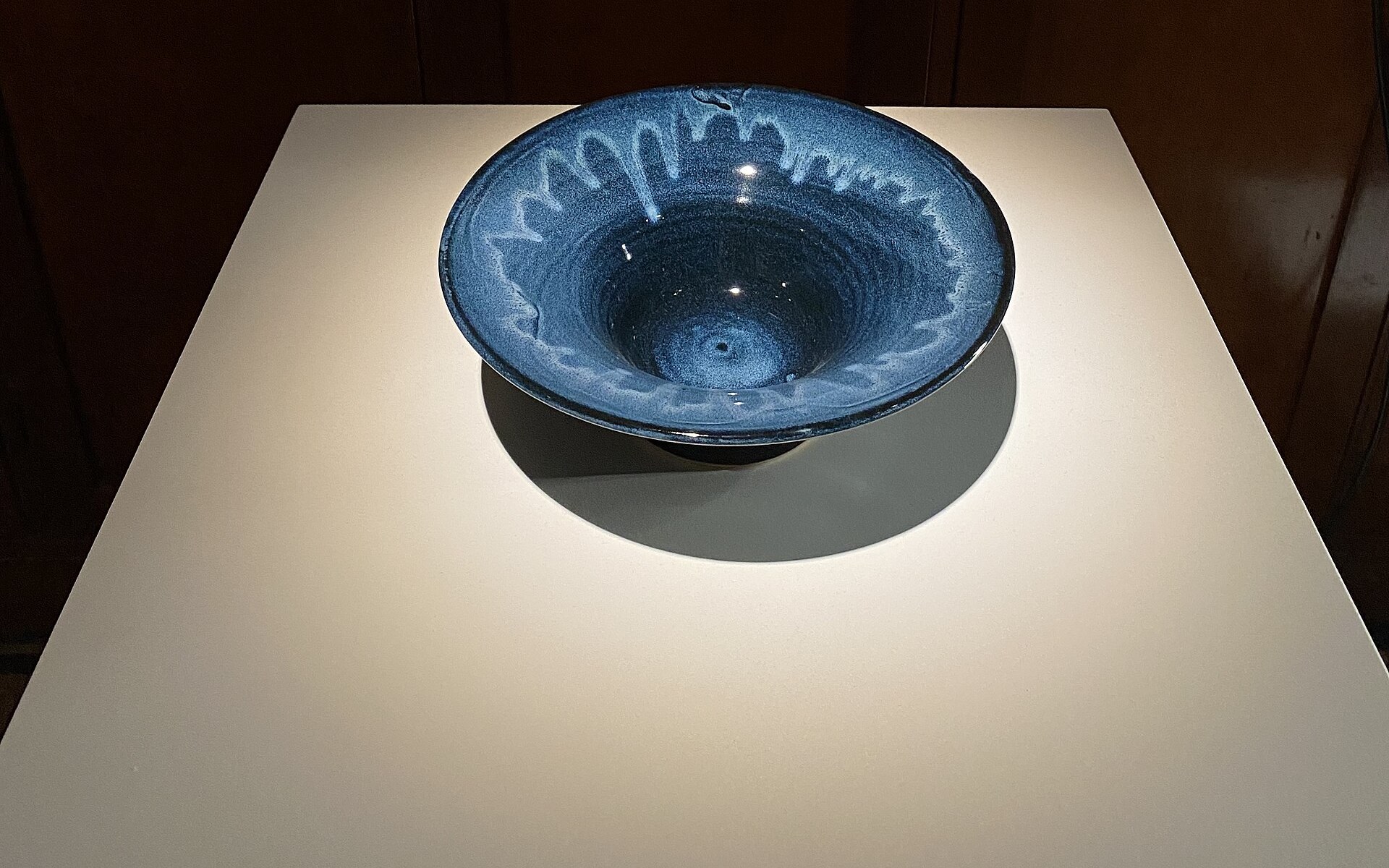
About a 20-minute drive west from the castle town of Aizu-Wakamatsu lies a small pottery village that retains the atmosphere of the Showa era.It is located in the Hongo district of Aizu-Misato Town, Fukushima Prefecture. Here, “Aizu Hongo-yaki”—said to be the oldest pottery in the Tohoku region—has been produced continuously for over 400 years.
The red roof tiles of Tsuruga Castle are actually connected to this pottery village. After strolling through the castle town, why not take a short trip to this pottery village as your next destination? We’ll guide you on how to enjoy visiting the pottery studios and discovering a piece that’s uniquely yours.
What kind of story does a 400-year history tell?
Aizu Hongo-yaki dates back to 1593.It is said to have begun when Gamō Ujisato, lord of Aizu-Wakamatsu Castle, invited roof-tile craftsmen from Harima Province (present-day Hyogo Prefecture) to fire roof tiles as part of the renovation of Tsuruga Castle.
Later, in 1645, Hoshina Masayuki, the lord of the Aizu domain, invited the potter Mizuno Genzaemon from Seto in Owari Province. After discovering clay in Hongo Village, Mizuno laid the foundation for full-scale pottery production.Mizuno is still commemorated today as the “Father of Pottery” during the Toso Festival held on September 16.
Furthermore, in 1800, Ihee Sato succeeded in producing porcelain using Okubo clay from Hongo Village. Thus, this village came to possess the techniques for both earthenware and porcelain.In 1993, the area was designated as a production center for both pottery and porcelain as traditional crafts, and in 2021, it was registered as a regional collective trademark.
It’s quite rare to be able to produce both earthenware and porcelain
The appeal of Aizu Hongo-yaki lies, above all, in the fact that “pottery and porcelain are both fired in the same village.” It is said to be the only production area north of the Kanto region that produces stoneware-based porcelain.
The raw material, Okubo pottery stone, is a labor-intensive substance that must be exposed to wind and rain for over a year before being crushed and kneaded into clay. As a result, the finished pieces are characterized by their thick, sturdy construction. This durability, suitable for daily use as tableware, is unique to pottery that has been an integral part of daily life for 400 years.
One of the representative glazes of Aizu Hongo-yaki is “Ame-yu” (amber glaze). This is a lustrous, amber-colored glaze, and a classic example of a vessel made with this glaze is the “herring bowl.”It is a bowl specifically designed for preparing “herring pickled in sansho pepper,” a local specialty of Aizu, clearly demonstrating the deep connection between Aizu’s dining table and its pottery.
The 300-Year-Old Munakata Kiln and the Distinctive Styles of 12 Pottery Studios
The Hongo district is currently home to 12 pottery studios scattered throughout the area. Moreover, their artistic styles are remarkably diverse. As noted on the official website, “one might even wonder if it’s appropriate to group them all under the umbrella term ‘Hongo-yaki,’” such is the richness of each studio’s individuality.
Among them, the most historic is the “Munakata Kiln,” which boasts a history of over 300 years. Its climbing kiln, built in the mid-Edo period, is a designated cultural property of Aizu-Misato Town. Although it sustained damage during the 2011 Great East Japan Earthquake, it was restored to its former glory in 2013 through a restoration project.Munakata Kiln’s herring bowls are also famous for having won the Grand Prix at the 1958 Brussels World’s Fair.
In addition, the alleyways along Seto-machi Street are dotted with unique pottery studios, such as “Ryumon-yaki,” which cherishes the spirit of nature, and “Tomizo Kiln,” which preserves traditional designs.In 2025, the regional brand “HONGOWARE” was launched, with 12 pottery studios collaborating to produce mugs featuring a unified design. It’s clear that while preserving tradition, they continue to take on new challenges.
How to Enjoy a Pottery Studio Tour: Finding Your Perfect Piece
The “Aizu Hongo Ceramics Hall” is a great starting point for your pottery studio tour. Inside, you can compare works from various studios all at once and even purchase pieces you like right on the spot. Start here to get a feel for the atmosphere of the entire village, then visit the studios that catch your eye.
Seto-machi Street is a quiet thoroughfare that retains the atmosphere of the Showa era. Since the pottery studios are scattered throughout the neighborhood, blending seamlessly into the residential area, you’ll enjoy the surprise of discovering them as you walk along the street—thinking, “Oh, this is a pottery studio, too!” Since some studios may be in the middle of production when you visit, it’s best to check in advance whether tours or purchases are available.
Some pottery studios also offer hands-on pottery experiences. Activities such as hand-building and painting vary by studio in terms of content, cost, and duration, so if you’d like to participate, please contact the individual studios or the Aizu Hongo Ceramics Hall in advance. Waiting for the pieces you’ve made to be fired and delivered is another part of the fun of the trip.
For souvenirs, we recommend everyday items like teacups, small bowls, and mugs. If you’d like to enjoy Aizu’s local sake, guinomi (sake cups) and tokkuri (sake bottles) make wonderful choices as well. For more information on Aizu’s sake, please also check out the Aizu Local Sake Guide.
Don’t miss the “Seto Market,” which begins at dawn
The “Aizu Hongo Seto Market,” held annually, is the flagship festival of Aizu Hongo-yaki. Said to have begun in the late Meiji period, this market starts as early as 4:00 a.m.—before dawn. Goods from various pottery studios line the streets, and the market bustles with people searching for hidden treasures.
In 2026, due to concerns about extreme heat, the event was held in June for the first time in its long history; on Sunday, June 14, approximately 40 vendors lined Seto-machi Street. It was reportedly the first time in seven years that the event was held on Seto-machi Street, following disruptions caused by the COVID-19 pandemic and other factors.Please check the official Aizu Hongo-yaki website or the Aizu Misato Town guide for the date of the next event. After enjoying the early-morning market, we also recommend returning to downtown Aizu-Wakamatsu to take a stroll along Nanokamachi Street.
Practical Information for the Aizu Hongo-yaki Tour
Item | Details |
|---|---|
Aizu Hongo Ceramics Hall | 3162 Aza Setomachi-ko, Aizu-Misato Town, Onuma District, Fukushima Prefecture 969-6042 |
Phone | 0242-56-3007 |
Hours | 9:00 a.m.–5:00 p.m. (Closed Wednesdays) |
Directions | Get off at Aizu-Hongō Station on the JR Tadami Line (approx. 13 minutes from Aizu-Wakamatsu Station; 210 yen). Approx. 20 minutes by car from Aizu-Wakamatsu Station |
Official Website | |
Hall Information |
Availability for studio tours and pottery-making experiences varies by studio. Please check the Aizu Hongo-yaki official website or contact each studio directly before visiting.
Summary
Aizu Hongo Ware is the oldest pottery village in the Tohoku region. Over its 400-year history, both earthenware and porcelain have flourished here, and 12 pottery studios continue to cherish and preserve their unique identities.Why not set out on a journey to discover your very own piece of pottery while strolling leisurely down Seto-machi Street and tracing the story that began with the red roof tiles of Tsuruga Castle? Aizu pottery will not only serve as a memento of your trip but also bring warmth to your daily meals.
Source and Reference Information
Date of Verification: November 20, 2026
Source:
- Aizu Hongo-yaki Official Website (Aizu Hongo-yaki Business Cooperative) https://aizuhongouyaki.jp/ — History, potteries, Toso Festival, and Seto Market
- Aizu Hongo-yaki Business Cooperative “Aizu Hongo-yaki Open Factory” PDF — Aizu Hongo Ceramics Hall business hours, closed days, address, and phone number
- “Aizu Hongo-yaki” Wikipedia — History (1593, 1645, 1800, 1993, 2021), 12 pottery studios as of 2026, schedule change for the Seto Market
- Fukushima TV “Event Moves from Summer to Early Summer: ‘Aizu Hongo Seto Market’ Begins at Dawn” — Held on June 14, 2026; approximately 40 vendors; held on Seto-machi Street for the first time in seven years
- TUF TV U Fukushima: “Carrying on Tradition While Valuing Artisans’ Styles: Aizu Hongo Ware from the Munakata Kiln, with a History Spanning Over 300 Years” — History of the Munakata Kiln; the herring bowl’s Grand Prix win at the Brussels World’s Fair
- Mapion: “Aizu Hongo Ware: Tohoku’s Oldest Pottery with a 420-Year Tradition Launches ‘HONGOWARE,’ a Unified Regional Brand” — HONGOWARE and the 12 participating kilns
Business hours, fees, dates, and availability for hands-on experiences are subject to change. Please check the official website for the latest information before visiting.
Image Credit: Featured Image “Aizu Hongo-yaki Ware (Victoria and Albert Museum, London, ‘Craft x Tech’ Exhibition, 2024)” — Wikimedia Commons, CC0 (Public Domain), Photo by Electriclamb