What Is an "Okiagari Koboshi"? | The Meaning of "Seven Falls, Eight Rises," 400 Years of History and Colors, the Tokaichi Festival, and a Guide to Painting Experiences
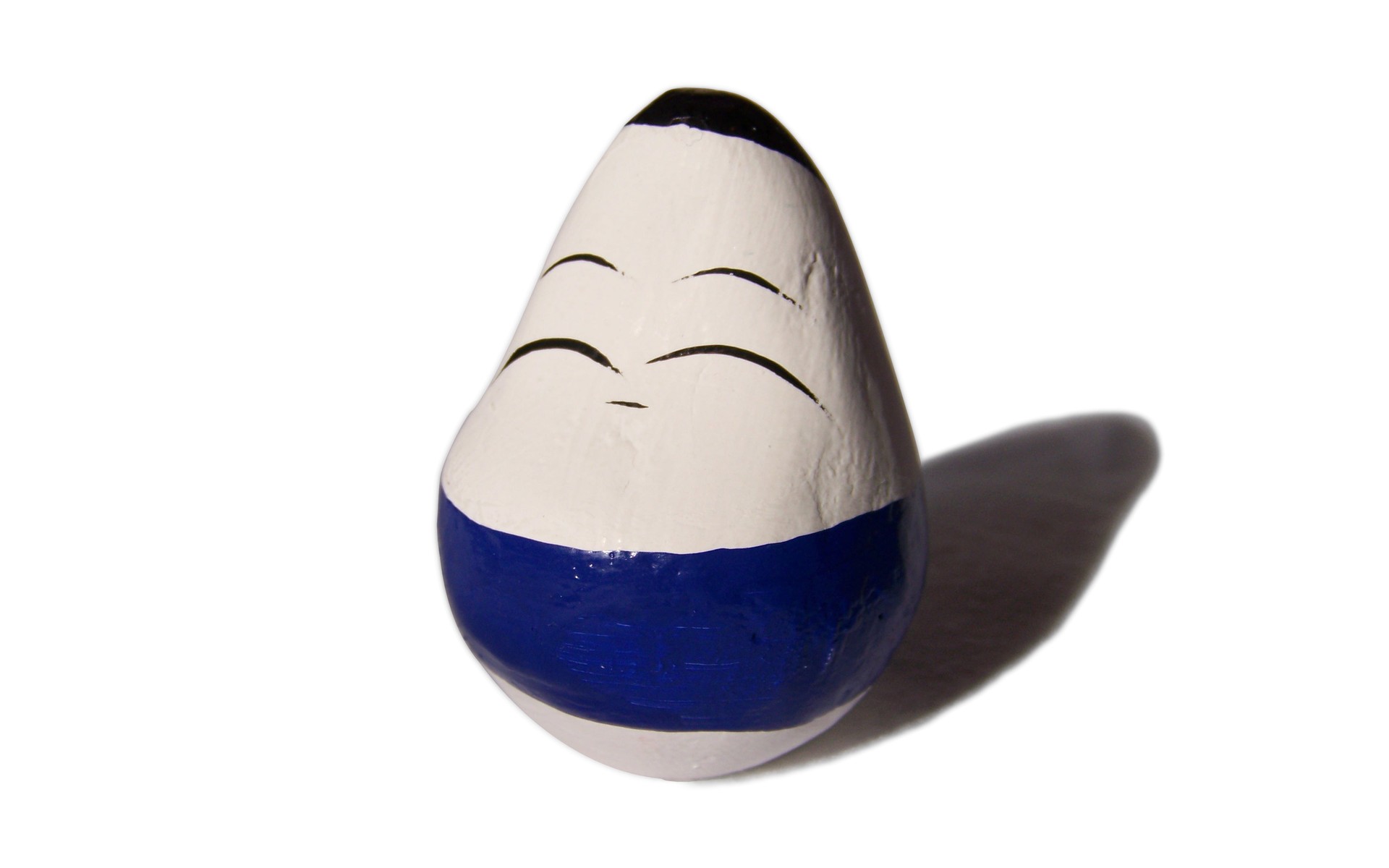
No matter how many times you knock it over, it always gets right back up. The Aizu folk toy known as the “Okiagari Koboshi” has been cherished by the people of Aizu for over 400 years as a good-luck charm symbolizing the spirit of “falling seven times, rising eight”—just as its appearance suggests.Alongside the “Aka-beko,” it is one of Aizu’s most representative folk crafts, and at the annual “Tokaichi” market held on January 10, it is customary to buy one more than the number of family members. In this article, we’ll introduce the history and significance of the Okiagari Koboshi, how to buy them at the Tokaichi market, and the painting workshops available in Nanokamachi.
What Is an “Okiagari Koboshi”? | The “Seven Falls, Eight Rises” Papier-Mâché Figure
Okiagari Koboshi is a traditional papier-mâché folk toy that has been passed down for generations in the Aizu region of Fukushima Prefecture. “Koboshi” means “child,” and these toys have an adorable appearance modeled after young children. They are also known by the alternative name “Okihime.”
Measuring about 3 centimeters in height and 7 centimeters around the torso, it is small enough to fit in the palm of your hand and has a shape close to a cone. Like a Daruma doll, it has a weight embedded in the lower center of the body, so it stands back up no matter how many times it is knocked over.Traditionally, the face is white and the lower half of the body is usually red, though recently versions in a variety of colors have appeared. The head, eyebrows, eyes, and mouth are painted black, and since each one is handmade, the unique expressions of each piece add to its charm.
Because it always rights itself no matter how many times it is knocked over, it is considered a lucky charm that embodies the spirit of “falling seven times, rising eight,” and is believed to bring blessings for “good health” and “family safety.” For the people of Aizu, it is the second most familiar local toy after the Aka-beko.For information on the Aka-beko painting experience, please also see the Aka-beko Painting Experience Guide.
400 Years of History | Ujisato Gamō and the Samurai’s Side Jobs
The origins of the Okiagari Koboshi are said to date back to the late 1500s, during the reign of Ujisato Gamo, the lord of the Aizu Domain. It is said to have begun when Ujisato had his samurai craft these figurines as a side job and sell them during the New Year.
During the Edo period, this practice spread as a form of side work to support the livelihoods of lower-ranking samurai who had been assigned no official duties and received no stipend.The custom of buying a new one at the annual New Year’s market, displaying it on the household shrine for a year, and then burning it at the end of the year created annual demand and became a system that supported the makers’ livelihoods. These figurines have been cherished as entities that absorb the events and misfortunes of the household over the course of a year.
Passed down in this way for over 400 years, the Koboshi continues to live on today as a symbol of Aizu.In 2013, as part of efforts to support recovery from the Great East Japan Earthquake, fashion designer Kenzo Takada initiated the “Okiagari Koboshi Project from Europe,” a painting project featuring artists from around the world.The Fukushima Prefectural Police’s mascot, “Fukubōshi-kun,” and Aizu-Wakamatsu City’s food education promotion character, “Koborin,” are also based on the Okiagari Koboshi.
Buying at the Tokaichi Market | The Tradition of “Number of Family Members + 1”
If you’re looking to buy an okiarigikoboshi, the best opportunity is the “Tokaichi,” Aizu’s largest New Year’s market, held every year on January 10.Approximately 300 stalls line Shinmei-dori, Omachi-dori, and Shiyakusho-dori in central Aizu-Wakamatsu, selling lucky charms such as Okiagari Koboshi and windmills, as well as traditional crafts, food, and drinks. The market runs from 8:00 a.m. to around 8:00 p.m.
Traditionally, you should buy one more Okiagari Koboshi than the number of people in your family. This reflects the wish that “our family may grow” or “our family and wealth may increase.” When making a purchase, it is considered good luck to actually tip the doll over and choose one that stands back up properly. Many stalls have a designated area where you can test whether the doll stands up.
The Tokaichi is a winter tradition in Aizu with a history of over 400 years, and the next event is scheduled for Sunday, January 10, 2027. Since traffic restrictions will be in place around the venue on the day of the event, visitors are encouraged to use public transportation or nearby coin-operated parking lots.
Where to Try Pottery Painting | Yamada Folk Craft Studio
If you’d like to make your very own Okiagari Koboshi, we recommend the “Yamada Folk Art Workshop” on Nanokamachi Street. For over 100 years, this workshop has specialized exclusively in handcrafting Aizu’s “Three Auspicious Items” (Okiagari Koboshi, windmills, and Akabeko), and is currently run by the fifth-generation head, Kenji Yamada, along with his family.It is considered the only workshop that continues to handcraft Okiagari Koboshi.
- Address: 12-35 Nanokamachi, Aizuwakamatsu City, Fukushima Prefecture
- Phone: 0242-23-1465
- Access: About a 12-minute walk from “Nanokamachi Station” on the JR Tadami Line
- Painting Experience: Held from April through mid-October; reservations must be made at least 3 days in advance (please check official sources for fees)
Nanokamachi Street, as featured in the Nanokamachi Street Walking Guide, is a street that retains the romantic atmosphere of the Taisho era. You can stop by while strolling down the street after sightseeing at Tsurugajo Castle or Mt. Iimori.
The “Tsurugajo Kaikan,” located right next to Tsurugajo Castle, also offers pottery painting experiences for “Akabeko” and “Okiagari Koboshi” figurines; the sessions are said to take about 30 to 45 minutes.
Where to Buy and How to Choose
In addition to the Tokaichi Market and the Yamada Folk Craft Workshop, you can purchase Okiagari Koboshi at souvenir shops throughout Aizu-Wakamatsu City and at select shops along Nanokamachi Street. At the Aizu Brand Hall (a market featuring products from 17 municipalities), you can also browse for Okiagari Koboshi alongside other Aizu crafts and food items.
When choosing one, the first step is to actually knock it over to see if it springs right back up. In addition to the traditional red, they come in blue and a variety of other colors, so you can choose based on your preference. Since they are handmade, each one has a unique expression—no two are exactly alike. Picking one with a face you like is part of the fun.
It is a time-honored custom to display them on a household shrine or similar place for one year, then perform a ritual burning at the end of the year and purchase new ones for the New Year. By continuing this annual tradition of buying one more than the number of family members, the people of Aizu have preserved this small good-luck charm for over 400 years.
Summary
The “Okiagari Koboshi” is a lucky charm—a small papier-mâché figure that stands back up even after being knocked over—embodying the perseverance and wishes of the people of Aizu.From the 400-year-old tradition of the Tokaichi market to the handmade techniques passed down in the workshops of Nanokamachi, and even its expansion into modern art and mascots, it fully embodies the culture of Aizu.When you visit Aizu-Wakamatsu, why not pick one up on Nanokamachi Street to see its expression and how it stands back up?
Information verified on: November 12, 2026 (Event dates, business hours, and the duration and fees for hands-on experiences are subject to change. Please check the official website for the latest information before visiting.)
*Photo: “Okiagarikoboshi from Wakamatsu.jpg” (Wikimedia Commons, CC BY-SA 3.0, no machine-readable author attribution)