Higashiyama Onsen Guide | The "Okuzashiki" Associated with the Aizu Domain: Approximately 1,300 Years of History, Day-Trip Bathing, and Access
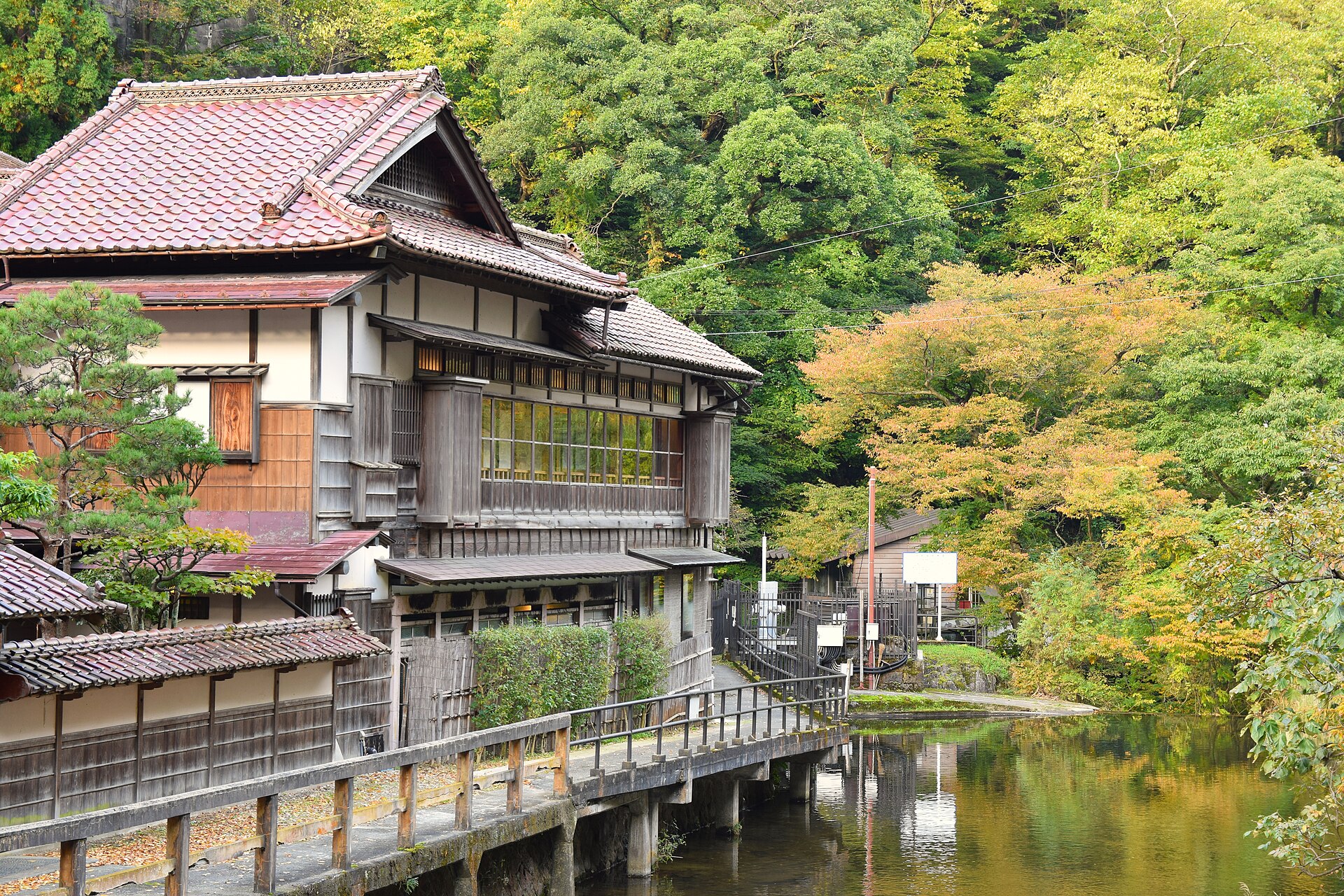
Higashiyama Onsen is a hot spring resort located in Higashiyama-cho, Aizu-Wakamatsu City. Ryokans and hotels line the Yugawa River valley, and although it is close to the center of the castle town, it retains the tranquil atmosphere of a traditional hot spring town.Legend has it that this historic hot spring resort was discovered approximately 1,300 years ago by the renowned monk Gyōki. It flourished during the Edo period as a therapeutic spa for the Aizu Domain and is also known as the “Inner Parlor of Aizu.” This article introduces the history of Higashiyama Onsen, the characteristics of its waters, information on day-trip bathing and foot baths, and access details, all based on official sources.
History | The Legend of Gyōki and the Aizu Domain’s Hot Spring Resort
The origins of Higashiyama Onsen are said to date back to the Nara period. According to the Aizu-Wakamatsu Tourism Guide, it is said to have been discovered approximately 1,300 years ago by the renowned monk Gyōki.Along with Kaminoyama Onsen and Yunohama Onsen in Yamagata Prefecture, it is counted as one of the “Three Pleasure Villages of Ou” and is a hot spring resort that has long been known throughout the Tohoku region.
During the Edo period, it flourished as a hot spring resort for the Aizu Domain and developed as the “inner sanctum” of the castle town of Aizu-Wakamatsu. It also served as a healing retreat for samurai wounded in battle, and records indicate that Toshizo Hijikata, vice-commander of the Shinsengumi, visited for treatment during the Bakumatsu period.From the Meiji period onward, it was beloved by literary figures such as Takehisa Yumeji and Akiko Yosano, and monuments inscribed with their poems can still be found throughout the hot spring town.It is also said to be the hot spring associated with Shosuke Ohara, who appears in the Aizu folk song “Aizu Bandai-san,” making it a hot spring town deeply intertwined with the daily life and culture of Aizu.In the early Shōwa period, an annex was built at a ryokan in Higashiyama Onsen to commemorate the engagement of Her Imperial Highness Princess Setsuko of Chichibu. This building was later relocated to the Imperial Medicinal Garden, where it still stands today as “Chōyōkaku.”
In addition to Higashiyama Onsen, Aizu-Wakamatsu City is home to another hot spring resort, Ashino-Maki Onsen, located in the southern part of the city. Since Higashiyama Onsen—a historic hot spring close to the city center—and Ashino-Maki Onsen—known for its spectacular valley views—have distinct characters, choosing between them to suit your itinerary is part of the fun.
Characteristics of the Water | Smooth Sulfate Spring
The waters of Higashiyama Onsen are sulfate springs, characterized by a smooth, pleasant texture on the skin. Known as “beauty waters” for their reputed ability to leave the skin silky smooth, they flow abundantly at a rate of approximately 1,500 liters per minute.The hot spring town stretches along the valley of the Yugawa River, with ryokans and hotels lining its banks. Soaking in the hot springs while listening to the gentle murmur of the river is the perfect way to relax between sightseeing trips around the castle town. The accommodations offer a variety of unique features, and the official website of the tourism association introduces them based on categories such asintroduces accommodations by categories such as “inns with direct-flow spring water,” “inns with open-air baths,” and “inns offering in-room dining,” so you can choose your lodging based on how you’d like to enjoy the hot springs. The hot spring town also carries on the culture of the Higashiyama geisha, and the tourism association offers guided tours led by geisha.
Strolling Through the Hot Spring Town
The pleasures of Higashiyama Onsen aren’t limited to soaking in the hot springs. More than a dozen ryokan and hotels line the Yugawa River, and simply walking along the riverbank allows you to enjoy the natural beauty of the valley and the scenery of the hot spring town.Monuments inscribed with poems associated with artists such as Takehisa Yumeji and poet Akiko Yosano are scattered throughout the town, allowing you to trace historical anecdotes as you stroll.The Aizu-Wakamatsu Tourism Guide suggests spending your time enjoying seasonal delicacies and local sake at a hot spring inn after a stroll to visit these poetry monuments. Since it is close to famous city landmarks such as Tsuruga Castle and the Oyakuen Garden, it is conveniently located as a base for combining your stay with sightseeing in the castle town.
Day-Trip Bathing and Foot Baths
If you’re looking to enjoy the hot springs on a day trip, day-use bathing at ryokan and hotels is the main option. The official website of the Higashiyama Onsen Tourism Association lists accommodations offering day-use bathing, complete with prices and hours.For example, Harataki is open from 1:00 PM to 8:00 PM (adults 1,080 yen, children 540 yen), and Oyado Tōhō is open from 1:30 PM to 4:00 PM (last admission at 3:00 PM, adults 1,400 yen,1,800 yen on Saturdays, Sundays, and holidays), and Oedo Onsen Monogatari Higashiyama Grand Hotel is open from 7:00 AM to 10:00 AM and 3:00 PM to midnight (last admission at 10:00 PM; adults 1,000 yen, 1,250 yen on Saturdays, Sundays, and holidays), among others.The long-established Shosuke no Yado Taki no Yu accepts guests only from 1:00 PM to 3:00 PM on Saturdays, Sundays, and holidays (adults: 1,200 yen; children: 600 yen).In addition, other options include Irori no Yado Ashina (6:00 PM–8:30 PM, 1,000 yen for adults), Niko Ryokan (700 yen for adults, free for children; please inquire about hours), and Hotel Fushimiso (4:00 PM–8:00 PM,700 yen for adults) are also listed, allowing you to choose an option that fits your itinerary, from an afternoon stop to an evening soak. However, since day-use bathing hours vary by day and may be suspended without notice, the Tourism Association advises calling ahead to confirm.
There are also footbaths in the hot spring district. According to the tourist association, operating hours are from 10:00 a.m. to 8:00 p.m.; they are closed during the winter and reopen in the spring. These serve as rest spots where you can stop by while strolling along the Yugawa River.
Access & Basic Information
- Bus: From Aizu-Wakamatsu Station, take the “Akabee” downtown loop bus (approx. 20 min) or the “Haikara-san” bus (approx. 35 min); get off at “Higashiyama Onsen Station” on either route
- By Car: About 20 minutes from the Aizu-Wakamatsu Interchange on the Ban-Etsu Expressway. About 10 minutes by car from the center of Aizu-Wakamatsu City
- Taxi: About 20 minutes from Aizu-Wakamatsu Station
- Inquiries: Higashiyama Onsen Tourism Association (110 Yumoto Takinoyu, Higashiyama-cho, Aizuwakamatsu City, Fukushima Prefecture 965-0814; Tel: 0242-27-7051)
Information verified on: November 9, 2026 (Prices and hours are subject to change. Please check the Aizu-Wakamatsu Tourism Navi or the Higashiyama Onsen Tourism Association’s official website for the latest information)
*Photo: “Higashiyama hot springs (37856367571).jpg” (Photo by Raita Futo, CC BY 2.0, Wikimedia Commons)